

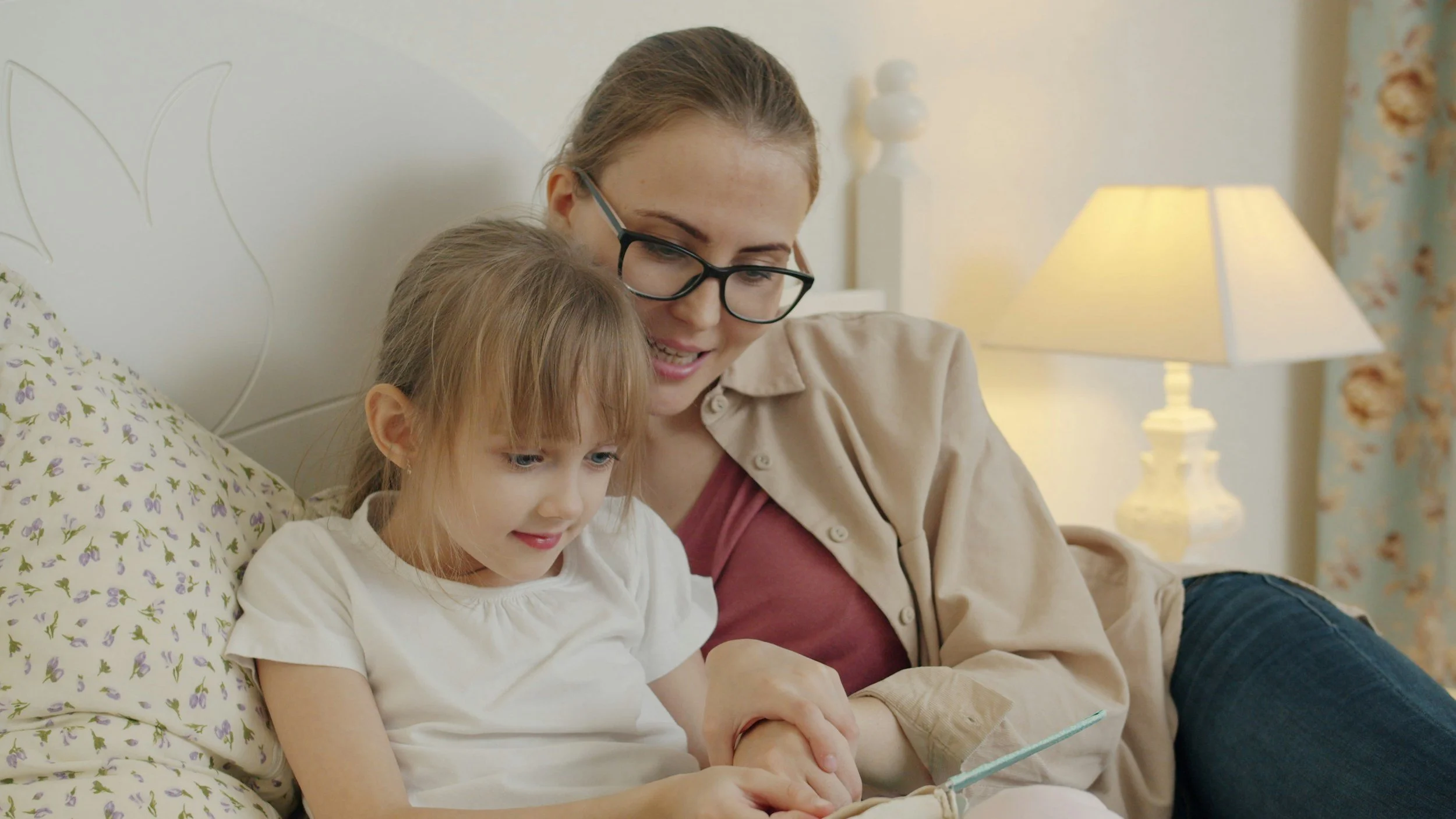
Because “they’ll grow out of it” isn’t a plan.
If your child is bright, curious, and capable—but reading feels like a constant uphill battle—you’re not imagining it.
Struggling readers don’t need more guessing.
They need answers, clarity, and a plan that actually works.
That’s where we come in.
What Is a Comprehensive Dyslexia Evaluation?
-
A comprehensive dyslexia evaluation looks at the whole reading and language system, including:
Phonological awareness (how your child processes sounds)
Decoding + encoding (reading & spelling)
Fluency
Reading comprehension
Oral language skills
Working memory + processing
We connect the dots between speech, language, and literacy—because reading is not just about letters… it’s about language.
Why Work With an SLP?
As a speech-language pathologist, I look at dyslexia differently.
Reading difficulties are often rooted in:
Language processing
Sound-symbol relationships
Narrative and comprehension skills
This means your evaluation doesn’t just answer:
👉 “Can they read?”
It answers:
👉 “Why is this hard—and what do we do about it?”
Who This Is For
This evaluation is a great fit if your child:
Is struggling to learn to read despite effort
Has been labeled a “guesser” or relies on pictures/context
Avoids reading or says it’s “too hard”
Has difficulty with spelling (even common words)
Reads slowly or without fluency
Has a family history of dyslexia
Isn’t making progress with current supports
Also perfect for:
Parents who want clarity before pursuing an IEP/504
Families tired of waiting for the school to “see it”
Kids who are smart—but something isn’t clicking
What You’ll Get
No vague reports. No confusing jargon. No dead ends.
You’ll walk away with:
✔️ A clear understanding of your child’s reading profile
✔️ Identification of dyslexia (if present)
✔️ Strengths and areas of need
✔️ Actionable recommendations
✔️ Guidance for school supports (IEP/504)
✔️ A roadmap for intervention (including Orton-Gillingham approach if appropriate)Kids who are smart—but something isn’t clicking